Hired to run creative. I ended up building the company.
A four-month interim engagement that was supposed to be creative direction, and turned into agency formation, an e-commerce turnaround, IP governance, influencer economics and a private-label launch. All of it running at once.
- Role
- Interim Business Consultant and Executive Creative Director
- Reporting to
- Owner and COO, parent holding company
- Duration
- Four months, rolling contract
- Workstreams
- Eight, concurrent
- Sector
- Multi-brand retail, DTC and dealer network
It started as a favor.
A producer asked me to assemble a crew for a project he could not yet fully describe. It was meant to be a podcast series, and my crew began shooting it. Partway through production the scope outgrew the plan, and I was called in to take over.
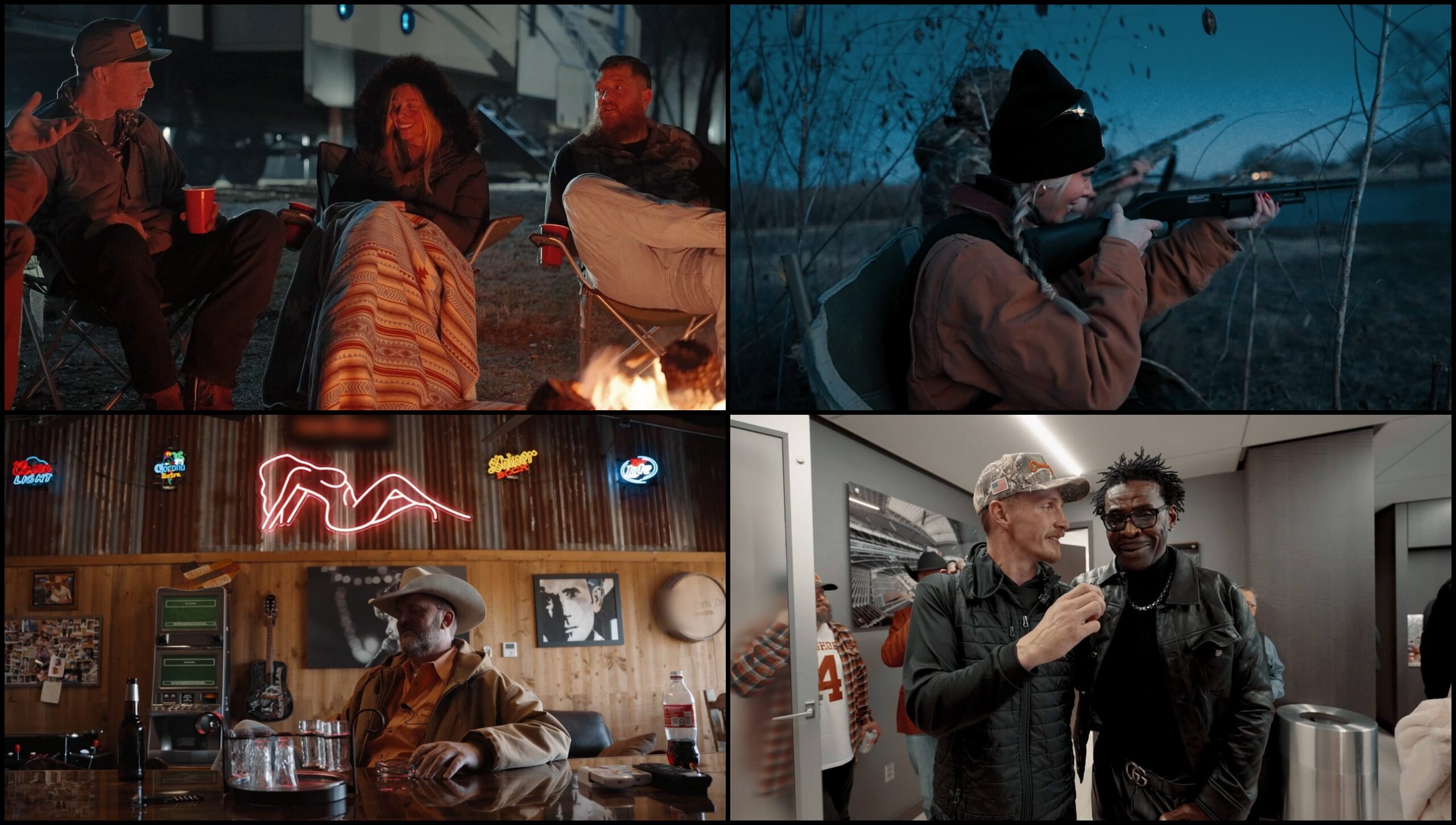
I put the infrastructure and legal groundwork in place, raised the standard from podcast to streaming-series quality, and shot four episodes. Along the way the founder saw what I could do, and the brief widened from one series to the whole business.
One location to more than thirty in roughly a decade. Nine operating brands. Close to a thousand people. Growth at that rate is a specific kind of achievement, and it produces a specific kind of problem: at some point the operating layer has to catch up with the business, and building that layer is a different discipline from the one that got you there.
That is where the larger job began. A content slate was already in production, an e-commerce channel was offline, a marketing team needed a permanent home, and the entity, legal and finance structure to carry all of it was still to be built. The brief was creative direction. The work was building that structure while the output kept moving.
I was brought in for creative direction. The first thing I produced was a risk register.
This is close to universal in founder-led businesses at this size, and it is not a failure. The instincts that take a company from one location to thirty are speed, conviction and personal relationships. They are exactly the right tools for that job. The next stage needs a different set, and knowing when to add them is its own kind of judgment.

Eight things to build at once
Two weeks mapping the current state before proposing anything. This is the scope that came out of it.
The difference between a company that survives that crossing and one that stalls is not talent. It is whether somebody writes the list down and says it out loud.
Eight workstreams, running concurrently
None of these waited for the others. The sequencing was as hard as any individual piece.
Operating infrastructure
The unglamorous foundation, and the reason everything else became possible. Built from nothing in the first eight weeks.

None of it is creative work. All of it was prerequisite to creative work being worth anything.
Agency architecture
I wrote the full business plan for the in-house agency: legal structure, ownership, service catalog, workflow, staffing model, studio specification, revenue model, risk register and projection framework.

Each portfolio brand was modeled as an internal client on a monthly retainer with quarterly review cycles. The operating budget came in at just over eight hundred thousand a year, with a break-even point the owner could check himself rather than take on trust.
The risk register ran to four categories, each with a named mitigation. Writing one before anything has gone wrong is the difference between a plan and a pitch.
Team consolidation
Seven marketing staff moved out of the dealership into the new agency structure, then defined out to a twenty-four person department across two offices.

Role and reporting maps, insurance and trading-name adjustments, benefits alignment, a payroll path, a staffing gap analysis with cost modeling, and an employee handbook written on standards from my own agency, where staff had stayed more than ten years.
The part that mattered most was not on the roadmap. I held off contacting the team directly until their own executive had briefed them personally. People find out they are being reorganized exactly once, and who tells them decides how the next six months go. Nobody left.
E-commerce turnaround
A parts and accessories brand with a strong category, loyal customers and thirty-plus locations feeding it. Its online channel had been switched off a year and a half earlier and never turned back on.
It had been scoped as a marketing problem. It was a systems problem. The storefront could not talk to the dealership operating system. Nothing synced. Inventory was maintained by hand. Orders had to be re-entered by a person. Customers were buying things that were not in stock.
You cannot fix that with a campaign. Driving traffic would have made the brand damage worse, because every new visitor would have met the same broken promise faster.
I ran it as four phases: discovery and infrastructure assessment, an executive brief that put the systems incompatibility in terms leadership could act on, a rebuild specification with role-based staff training, then campaign strategy and post-launch support.
Then the historical data produced the finding that reframed the whole strategy.
The site everyone was arguing about had never been where the volume was. The other contribution was sequencing: middleware now, a retail-grade system later, are different problems on different timelines. Conflating them is how a turnaround becomes a replatform nobody approves.
Media IP governance
A four-episode slate had been produced across four major venues. My job was to build the legal and ownership structure around it, retroactively and going forward.
I produced a production and legal status review episode by episode, an ownership summary establishing chain of title under work-for-hire doctrine, a two-option strategic analysis with an action plan for each path, and a milestone checklist with named owners and deadlines.
The outcome that mattered was establishing the company’s ownership position from its own records rather than negotiating for it. Working back through the existing paperwork produced an executed agreement that settled the question directly, and counsel confirmed it.
The strongest position in a rights question is usually already sitting in your own files. Somebody has to go and look for it.
Alongside that I built the standing structure: agreement templates, a release workflow, the insurance program and a chain-of-custody process, so the next production would not need the same exercise.
Influencer economics
The anchor creator partnership reached roughly 1.5 million followers across four platforms, and nobody had ever put a number on it. No tracking links, no contract, no model for what it was worth.
I built the valuation from sourced per-unit benchmarks: tracked clicks against the group’s own paid search cost per click, views and watch time against published rates per platform. Conservative inputs, methodology stated so anyone could argue with the assumptions rather than the conclusion. It came out above 1.1 million dollars of equivalent annual value.
From there it became a commercial structure rather than a relationship: partner status, co-branding standards, tracking discipline, a service initiative fronted by the creator, and a new revenue line charging manufacturers for model content with a defined three-way split.
Private-label product launch
The group was selling competitors’ consumables in its own stores, at distributor margin, in the highest-repeat category in the sector. I built the go-to-market model for a private-label line to replace it.
Four vendors quoted on landed cost, minimum order quantities, pallet configuration, lead time and freight. Target pricing against competitive comps. Fulfillment fees modeled including storage by inventory age. A location-by-location forecast with monthly seasonality.
| Channel | Share of units | Role in the model |
|---|---|---|
| Dealership retail | 25% | Highest margin, lowest acquisition cost, existing footfall |
| Marketplace fulfillment | 50% | Volume engine, thinnest margin after fees |
| Creator affiliate | 25% | Audience already built, commission per unit |
| Year one, modeled | 24,005 | 61% to 77% gross margin by SKU |
This is product development, not marketing. It is also the workstream that changed how the client saw the engagement, because it was the first one denominated in margin rather than impressions.
Enterprise brand governance
Five consumer brands across thirty-plus locations, with no shared standards and no approval chain.
Logo usage, color systems with print matching per brand, typography, tone of voice, a marketing operating procedure with posting cadence and content mix, complete advertising specifications, and an approval chain.
Brand guidelines fail when they are aspirational. The test is whether a location manager can follow them without calling anyone, and whether someone owns the answer when they cannot.
By the numbers
You can spend a fortune on the promise and lose all of it in the fulfillment. The more useful half is the reverse: fixing the operational layer often produces brand gains no campaign could have bought, because you have stopped manufacturing disappointment.
Which is why the sharpest question a creative leader can ask a new client is not what do you want to say. It is what happens to someone who believes you.
Four things that apply anywhere
The RV sector is specific. None of this is.
Most marketing problems are operations problems wearing a disguise
A dead channel is rarely a failure of messaging. It is usually two systems that cannot talk to each other and nobody whose job it is to care. Diagnose at the systems level before anyone writes a brief.
Write the risk register before you need it
Nearly every decision this engagement turned on was on a list I had written in the first fortnight. Seeing something early is worth nothing unless it is written down and put in front of the people who can act on it. Once it is, it is worth a great deal.
Check what you already own before you negotiate for it
Rights questions are more often solved in the filing cabinet than at the table. Establish your actual position from your own records first. It costs less than negotiating, and if you still have to negotiate, you do it from somewhere stronger.
Build the machine so it runs without you
The measure of an interim engagement is what survives the handover. Entity structure, templates, finance model, standards and a trained team all stayed. That is the deliverable, not the decks.
The client is not named here and individuals are not identified. Figures quoted are models I built or values I established, given at a level that discloses nothing about the client’s trading performance. Specifics about their systems, agreements and commercial position stay with them.
I am glad to talk through the specifics under NDA, and references are available on request.
I get hired when the marketing problem turns out to be an operations problem.
Interim leadership for founder-led and mid-market companies that have outgrown their own infrastructure. Diagnosis first, then the build, then the handover.
Start a conversation