From player cards to the full game UI: designing NBA All-World for Niantic
Niantic, the studio behind Pokémon GO, built NBA All-World with the NBA and the NBPA. As Executive Creative Director and partner at Dreamspace, I led the design that began with one feature, the player card, and grew into the game’s interface, its map and its icon system.
- Role
- Executive Creative Director and partner, Dreamspace
- Client
- Niantic, with the NBA and NBPA
- Built with
- Hyp Games, development and game mechanics
- Began
- 2021, with the player card
- Scale
- 15+ people, 100+ screens, 700+ icons
A basketball game played on the real map.
NBA All-World is an officially licensed, location-based basketball game from Niantic, the studio behind Pokémon GO, made with the NBA and the NBPA. Players collect and customize NBA stars, and compete against them. Niantic builds its games around four ideas: draw people outdoors, inspire exploration, encourage exercise and create connection.
The game launched worldwide on January 24, 2023. Hyp Games developed it with Niantic and designed the game mechanics. Dreamspace designed the interface: the player card, the map and its points of interest, the icons, and the screens that tie them together.
It started with one feature: the player card.
Our work on NBA All-World began with the player card, a feature that John Hanke, Niantic’s founder and then CEO, had a clear vision for. We delivered on that vision. The result was that Niantic hired us to design the interface for the whole game.
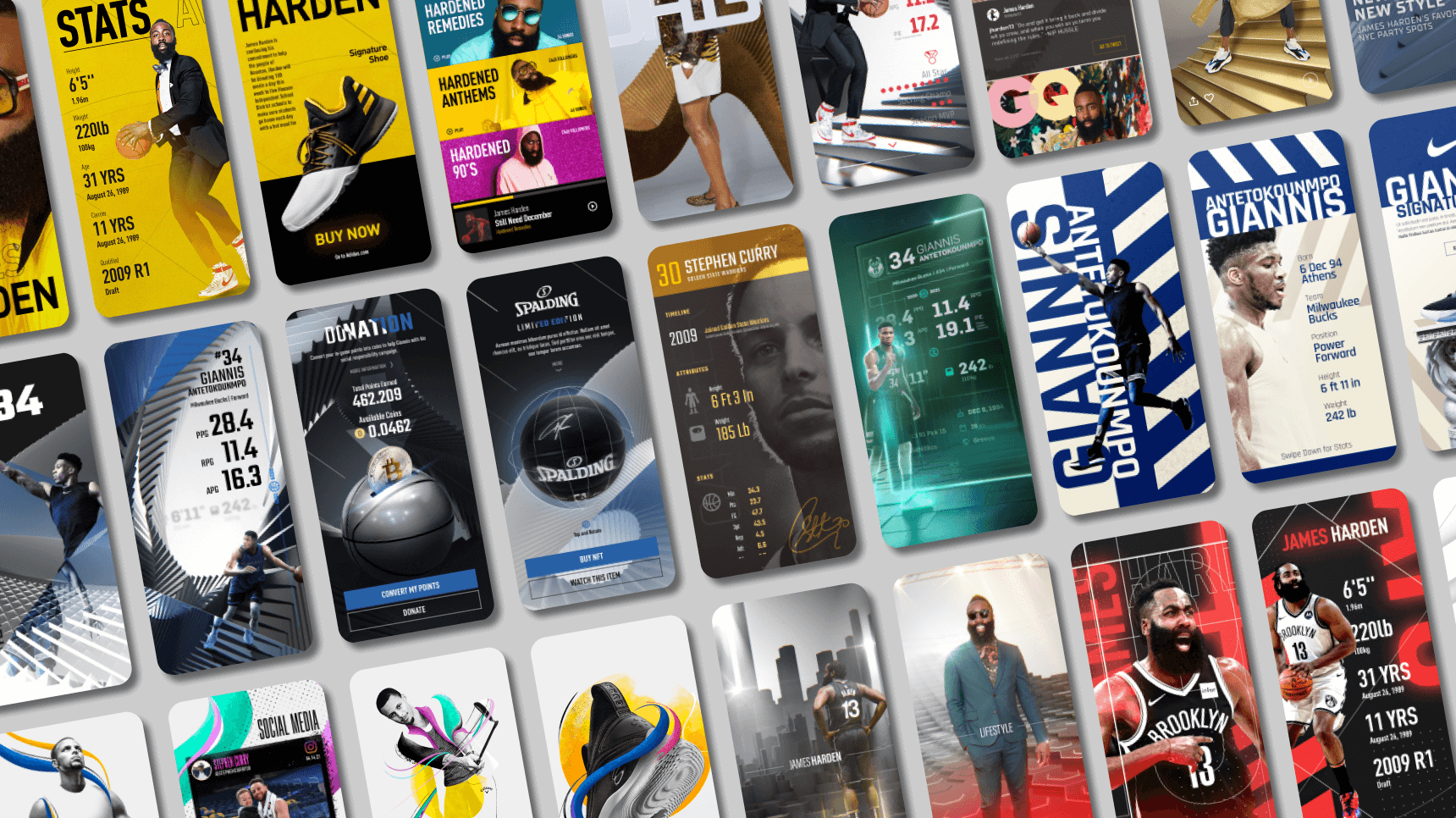
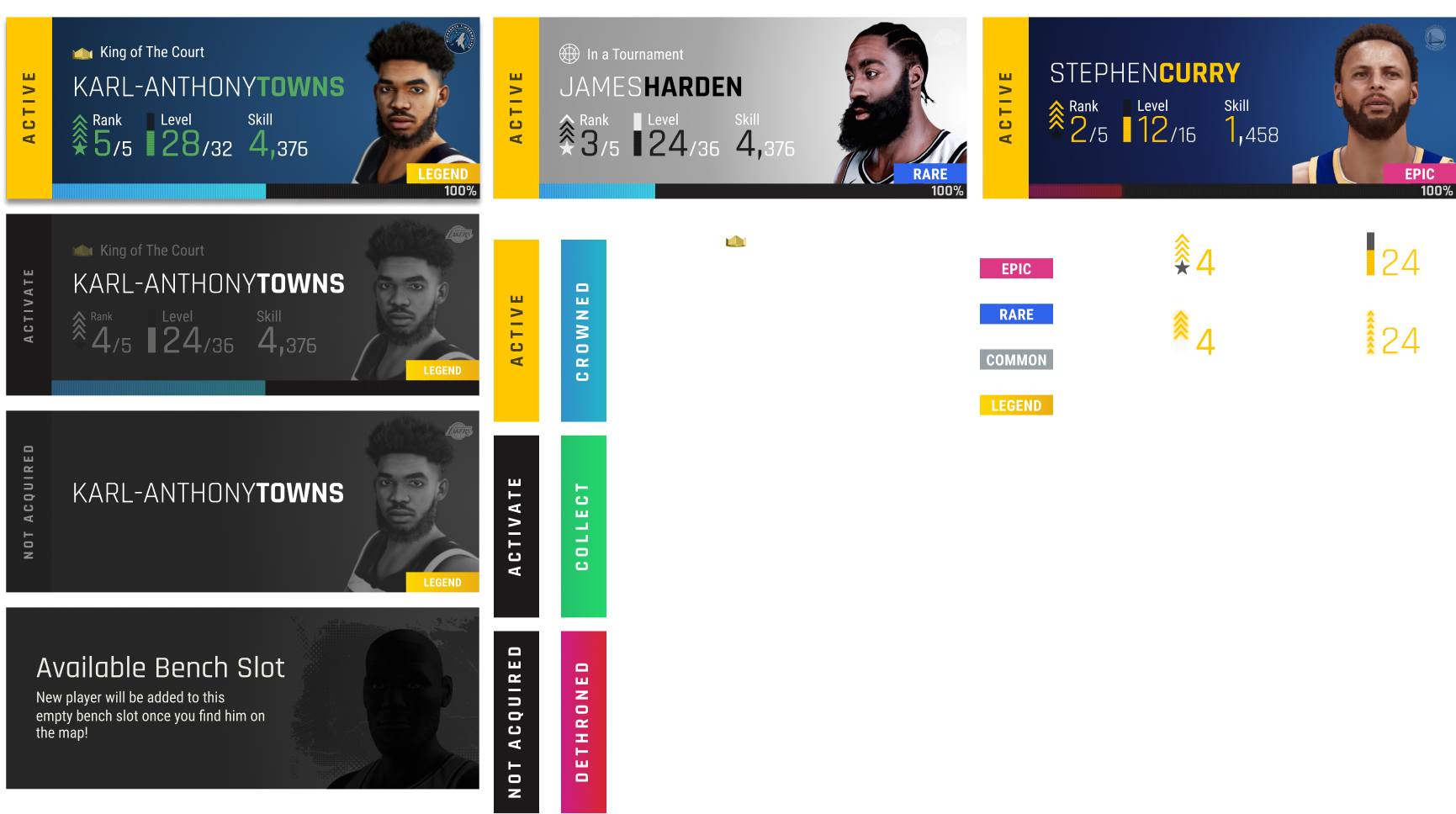
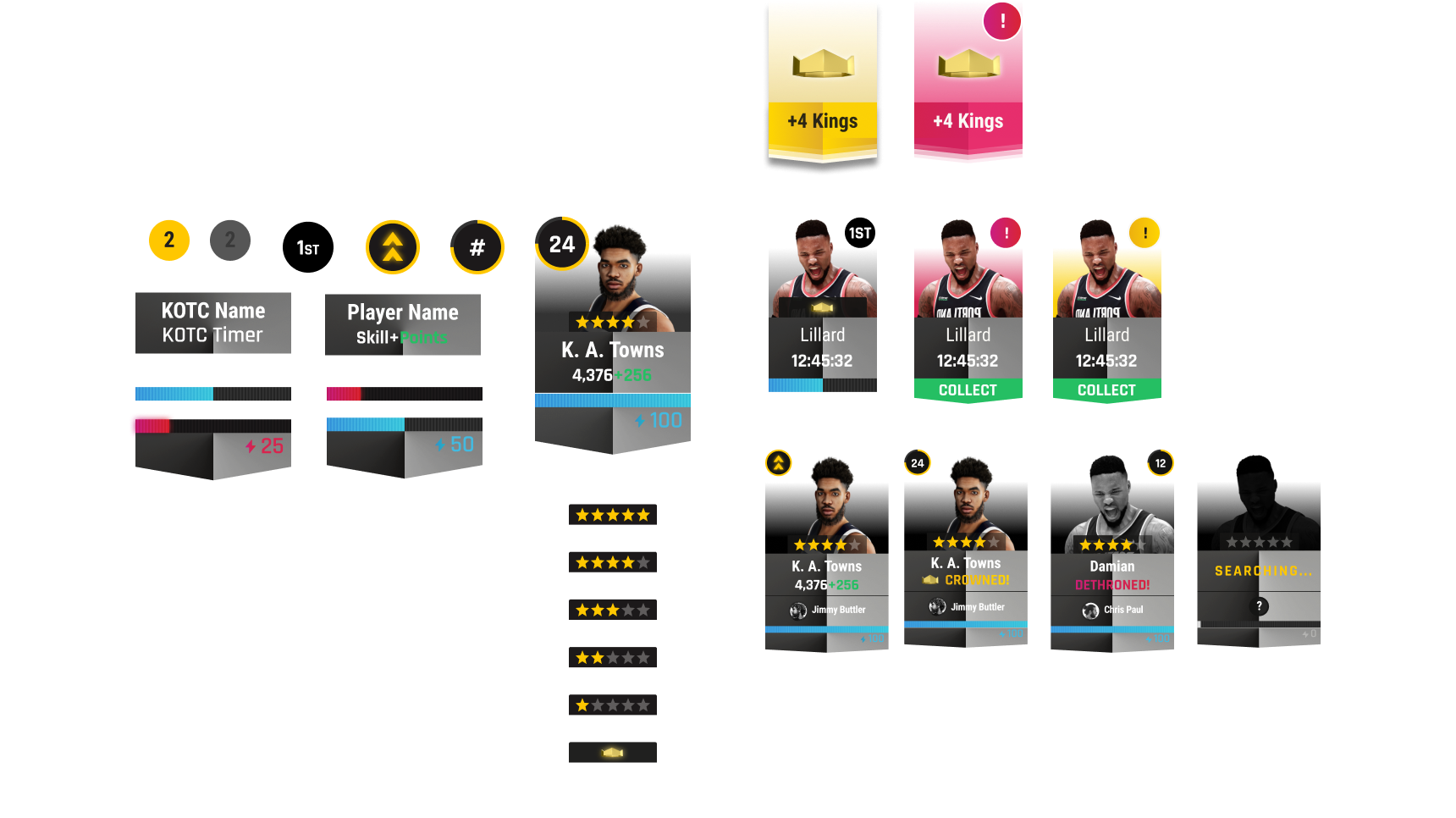
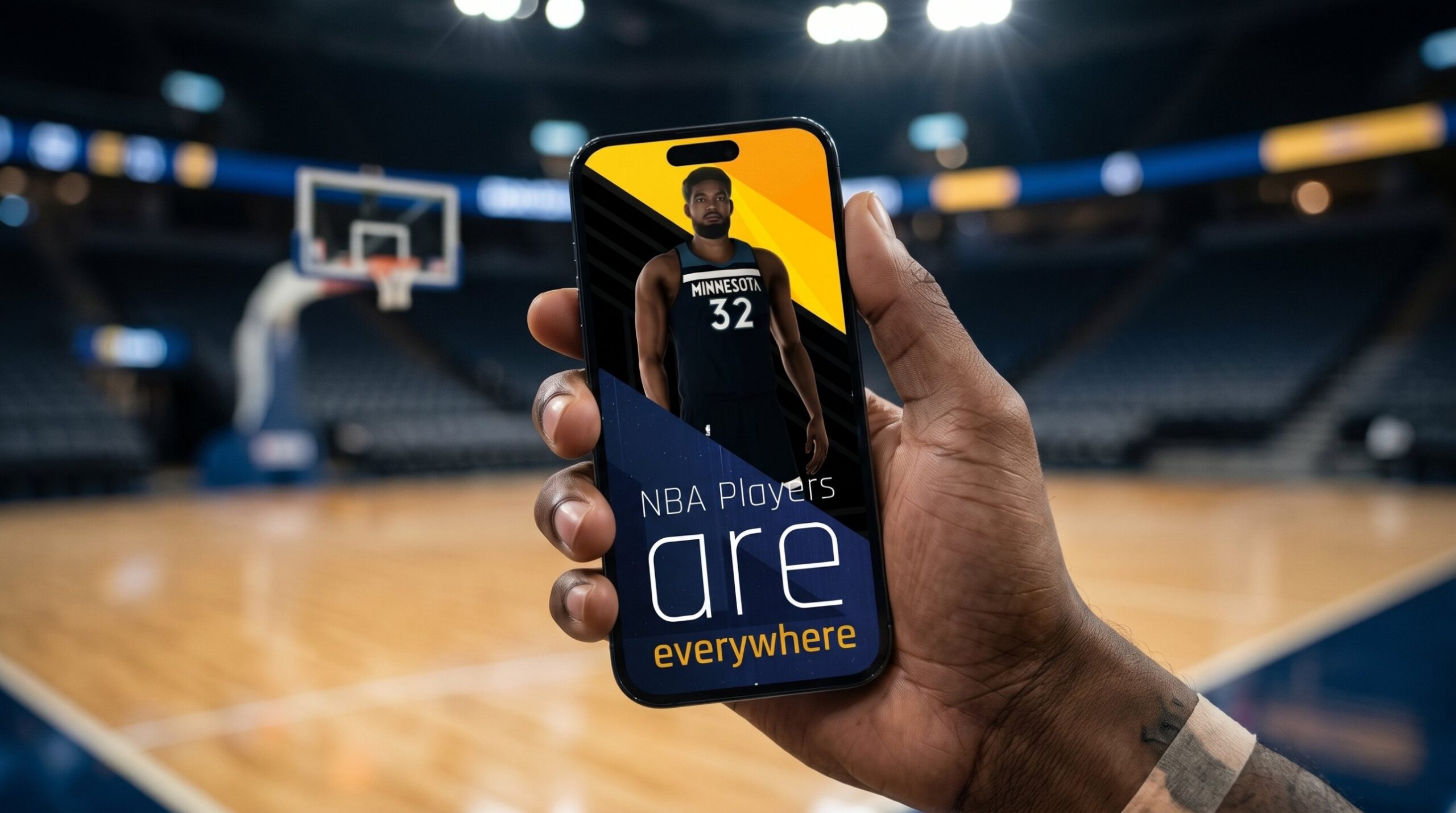
Most player cards look like game assets. We went another direction. Each card is a highly stylized frame with the look of a high-end magazine, so it connects with hoop culture instead of game culture. Behind the frame sits a landing page for each player: game stats, news and lifestyle content, including fashion, social impact and favorite music. The cards give NBA players a place to share what matters to them beyond the game.
We designed the UX and the UI of the player cards ourselves. Navigation is split into three categories, stats, news and lifestyle, each with sub-categories, so fans can get to know their favorite players on a new level.
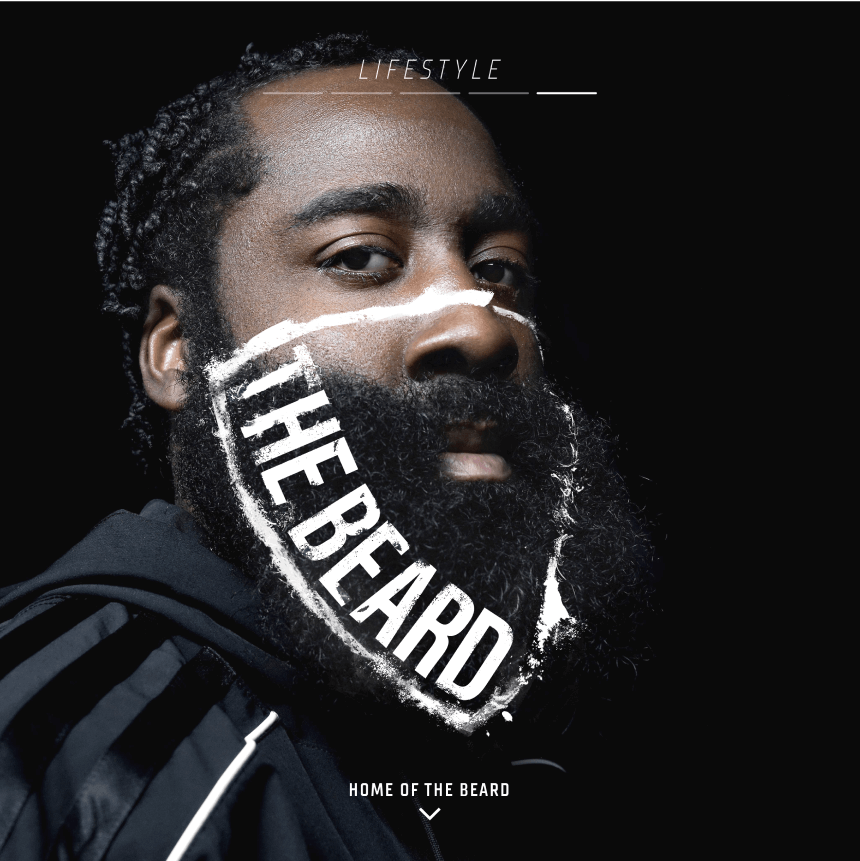
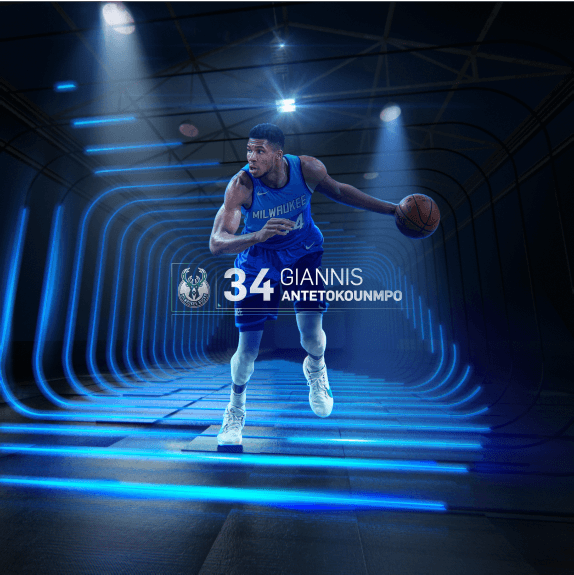
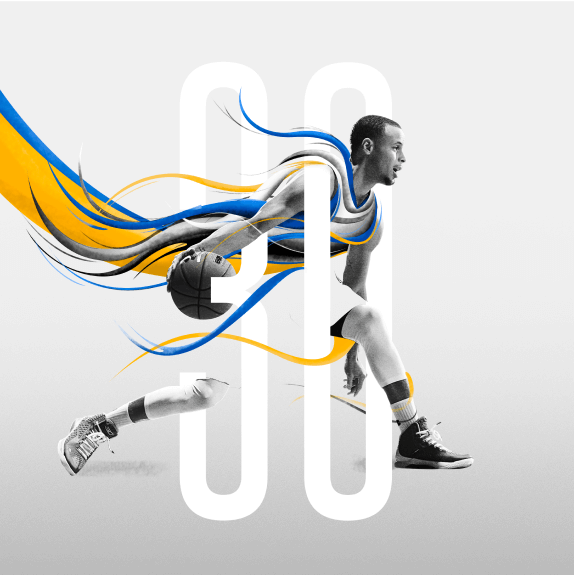
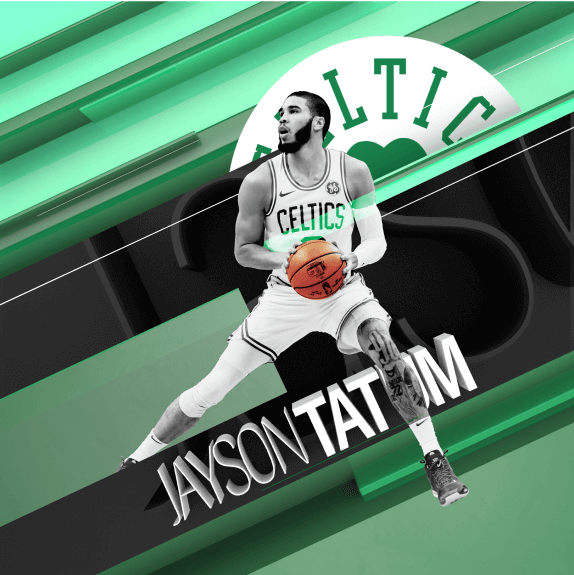
We delivered on his vision. Then Niantic asked for more.
With the cards in place, Niantic hired Dreamspace to design the interface for the whole game. Hyp Games was developing the game and designing its mechanics, and we joined them as the design partner. For the main game UI, we worked from Hyp’s UX documents and designed the UI. For the player cards and for the map and points of interest, we designed both the UX and the UI. I led a team of more than 15 people.
We started with one feature and ended up designing the interface for the whole game.
Over two months, we explored every layout and color combination we could and presented them to Niantic. We ran work sessions of four to five hours, twice a week, with publishers and developers in different time zones. We designed, revised and approved everything together, as one team.
One visual system for more than 100 screens.
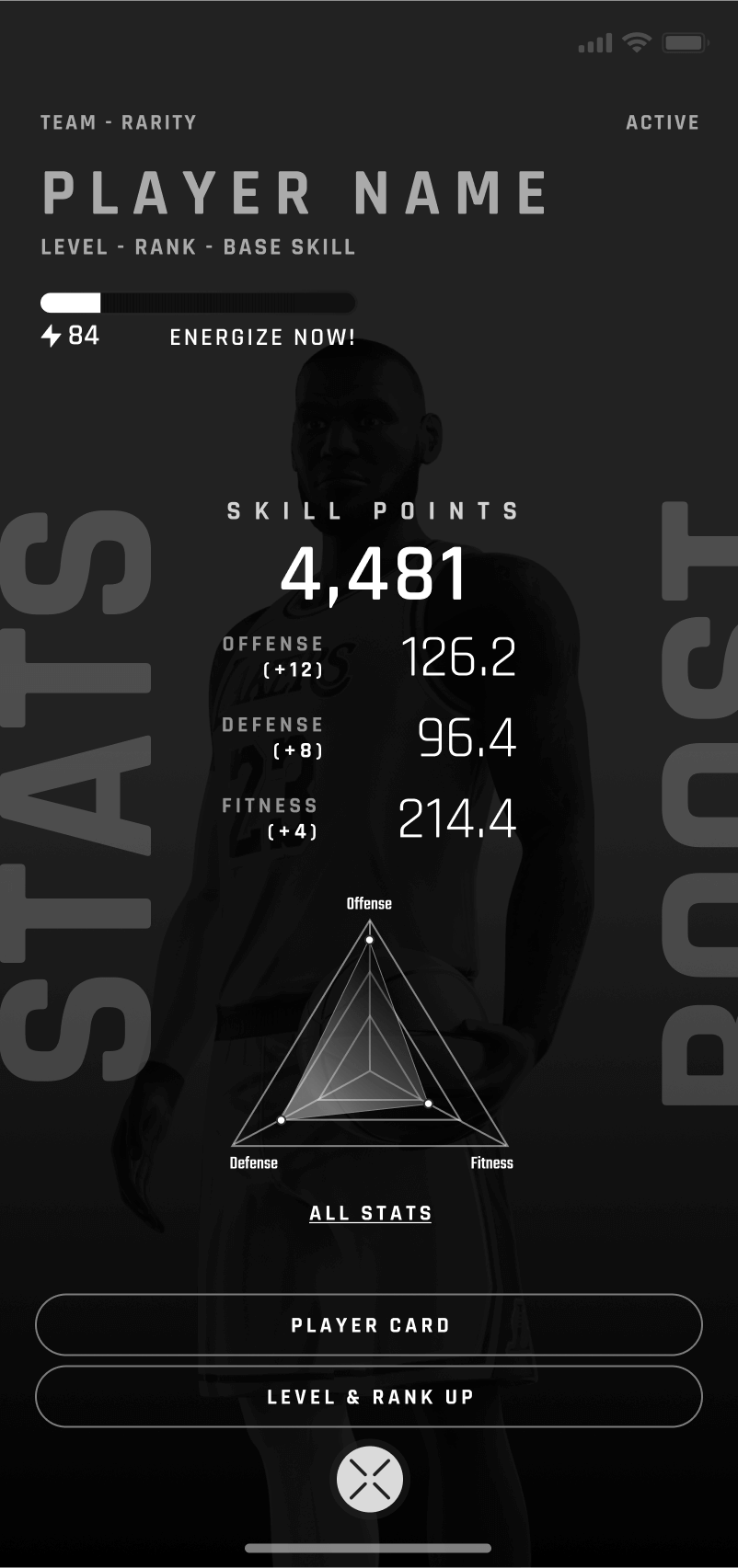
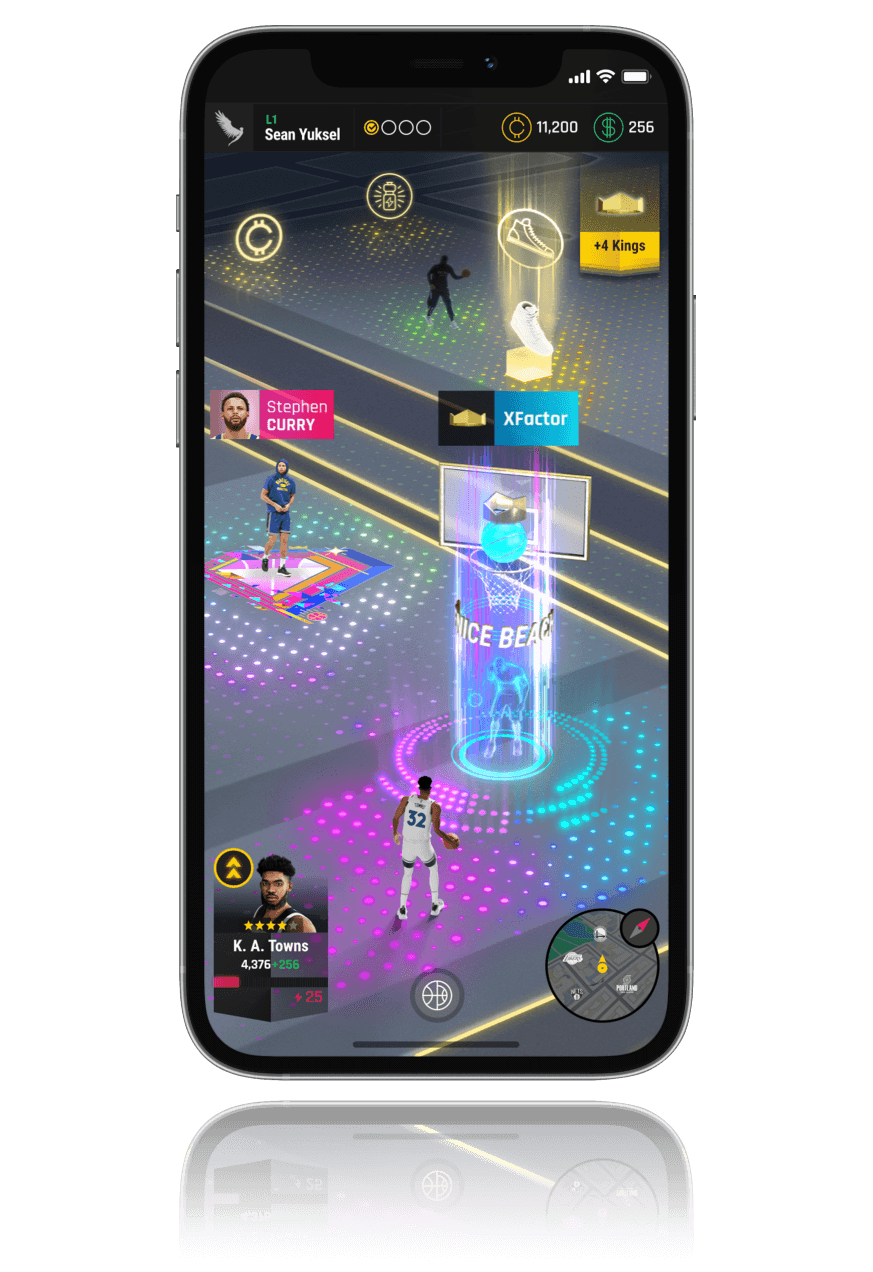
The player is the coach. They manage many players and make even more choices. They level up and boost, recruit one player and bench another, leave some on the courts to hold their place on the leaderboards, and travel through countless arenas. With detailed skill parameters and a steady stream of decisions, the UI had to stay simple and sleek so players could move through complex mechanics without fighting the interface.
We united more than 100 game screens in one visual system.
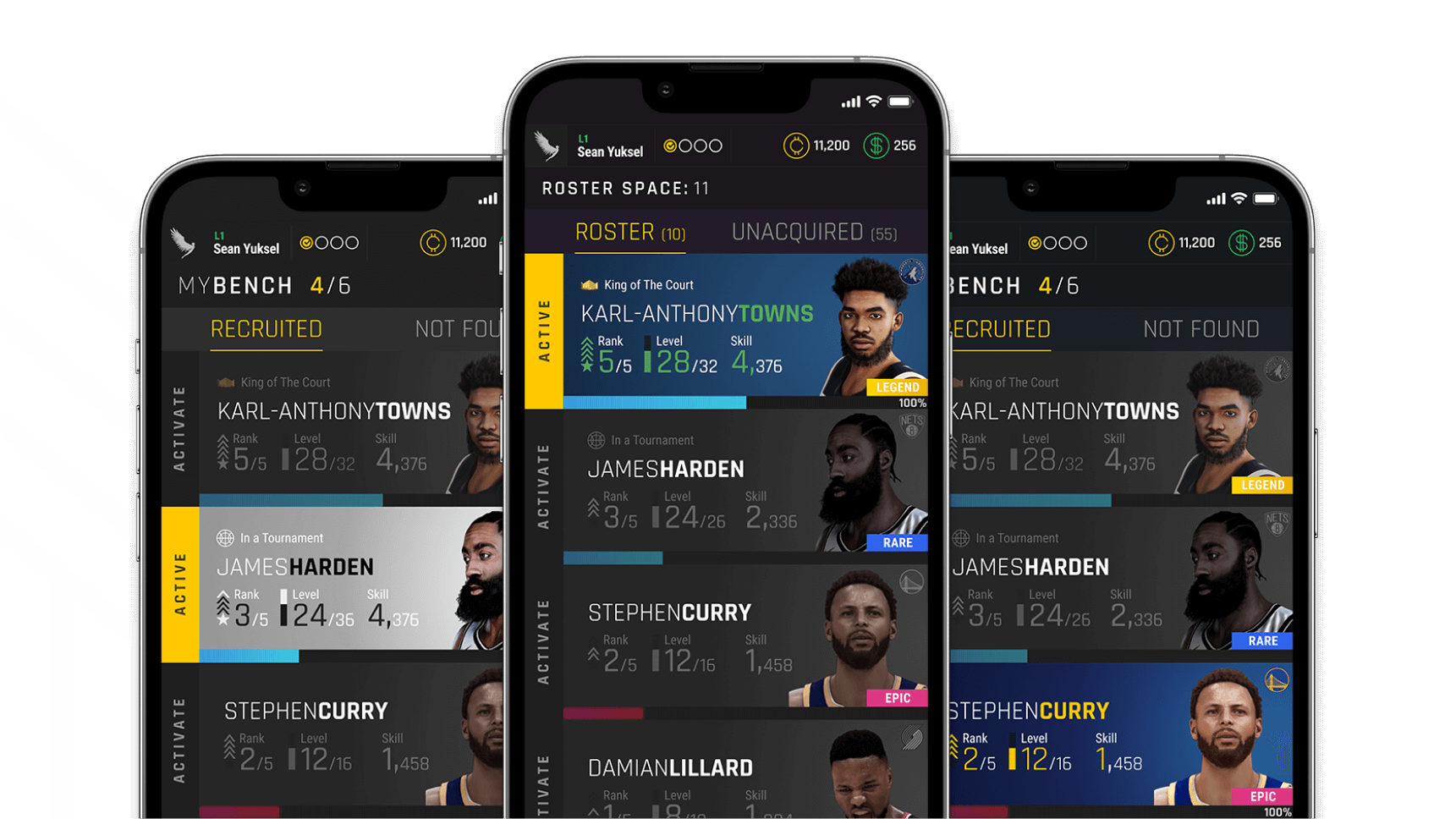
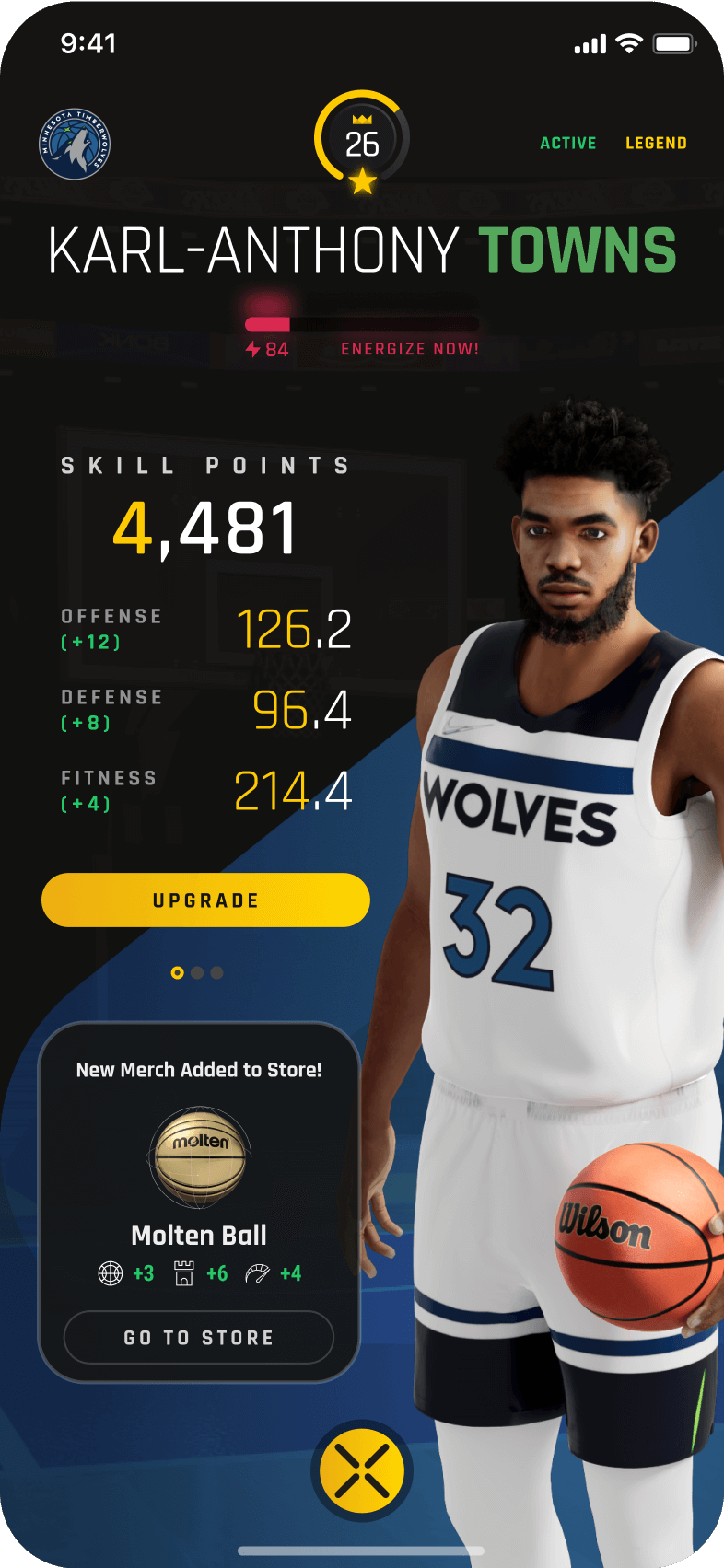
Black and dark gray, with a vibrant yellow, form the core palette. The contrast alludes to the feeling of night. Bold secondary colors add the spirited energy of the game, and they carry meaning: blue, green and magenta mark states and create hierarchy. Team color combinations appear in player selection and management, and each player card takes its team’s colors.
For type, we chose Rajdhani as the primary typeface and Roboto as the secondary. Both are condensed Google Fonts, which gave us more room for information-rich screens and long text, and the best compatibility across languages.
More than 700 icons that work as a language.
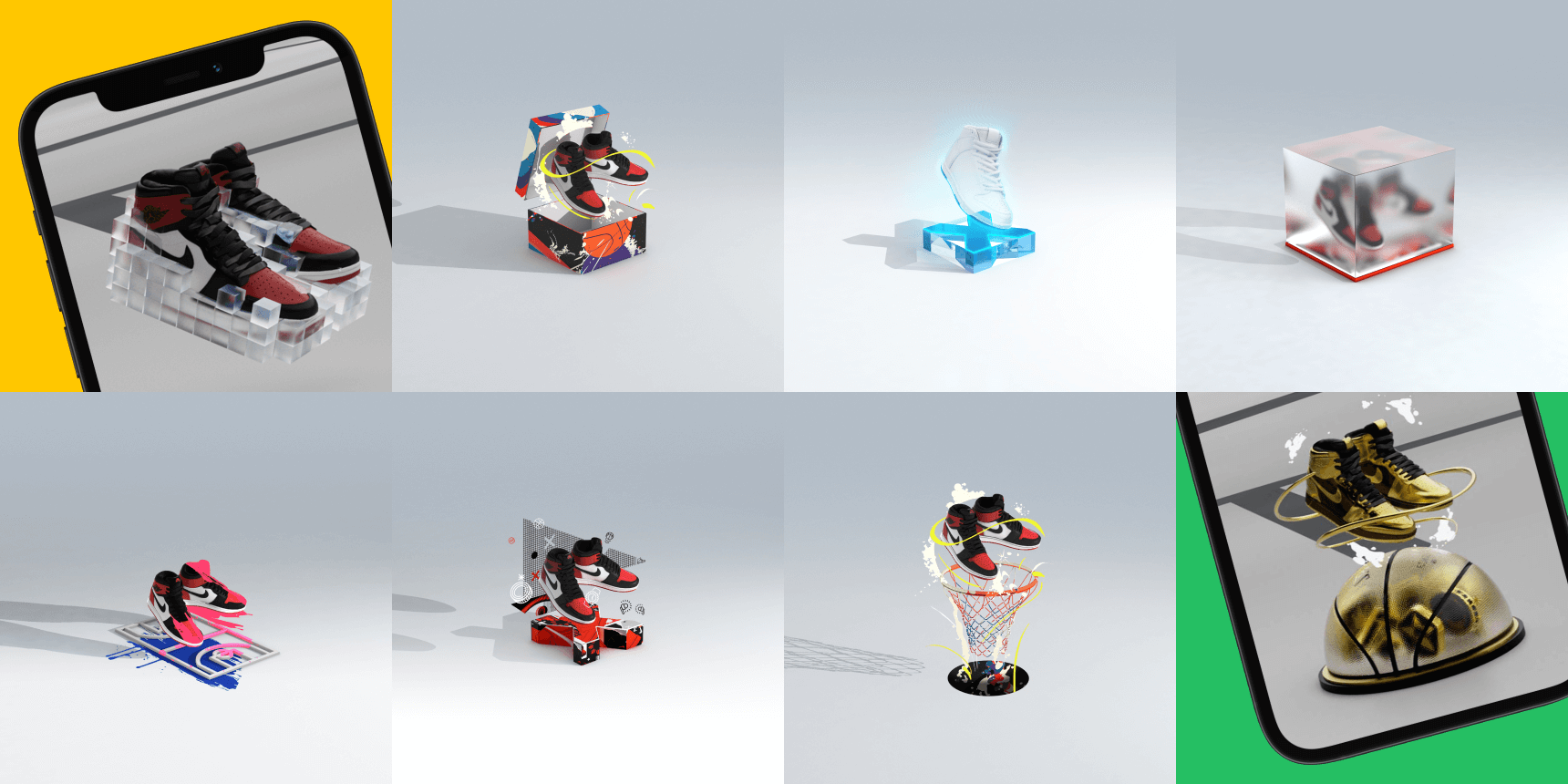
We designed more than 700 custom icons as a universal language, built to be used well beyond the game: in an outside product like Campfire, or in features introduced later, like Quests. The icons mix and match, convert to 3D and merge into new assets, so one set can cover an endless range of uses.
A map where real places become game places.
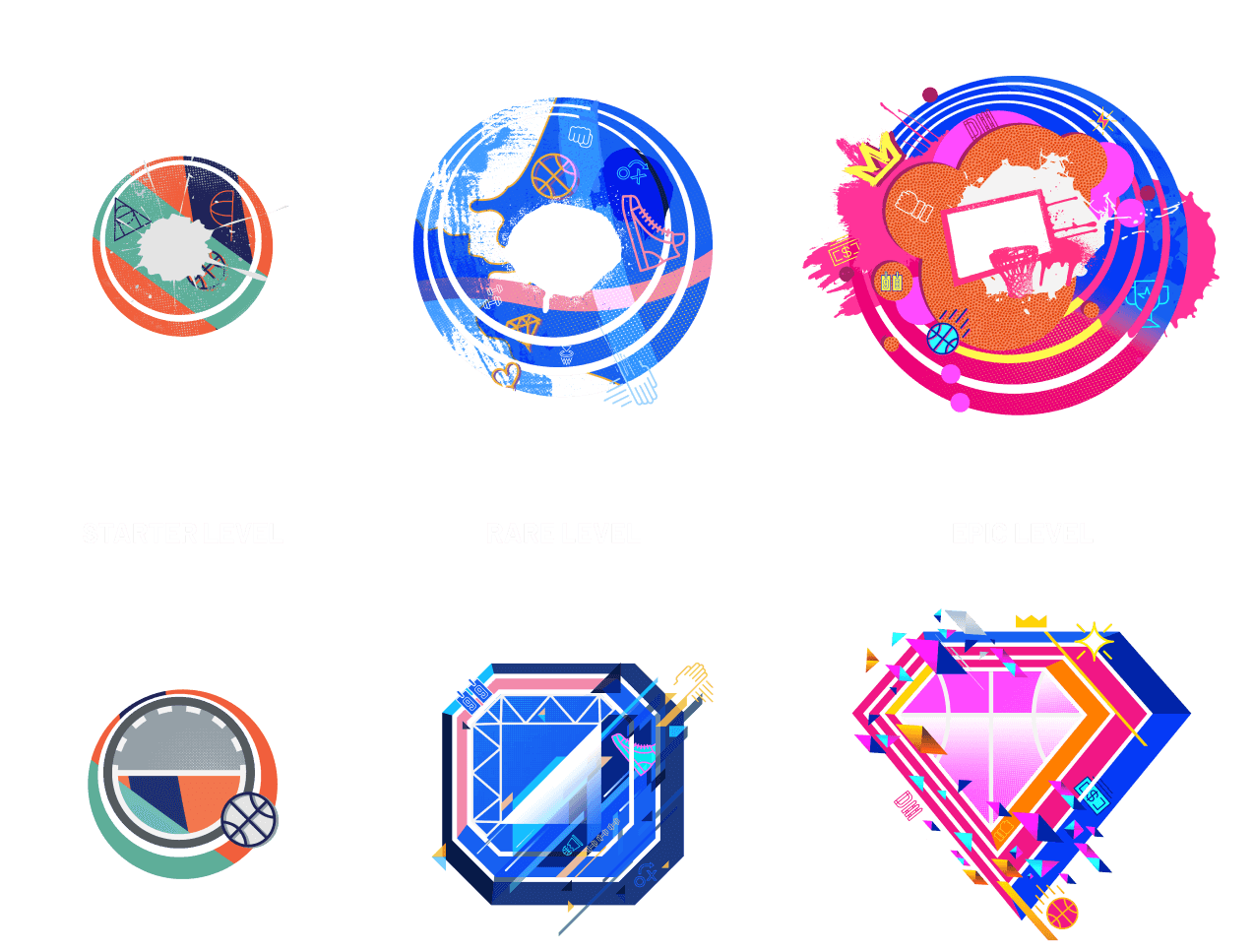
For the map and its points of interest, we designed both the UX and the UI. We explored distinct silhouettes and characteristics for each POI over a simple map, so real places became the focal points. A holographic dot marks the POIs within a player’s range, which makes them pop and strengthens the link between the game and the real world.
Arena
Tied to the real locations of NBA arenas. Players compete one on one at half court. Invite-only tournaments are held here for maxed-out players, who can reach Legendary status through Tournament Rings.
Court
Existing basketball courts, where players compete one on one at half court. The Ruler of the Court mini-game lets players take over a location and earn rewards.
Player Point
Places where NBA players can be found. Players run drills to earn shards of that player, and players can be encountered all around the world.
Dropzone
Places like convenience and clothing stores, where players pick up consumables and game items such as energy, power-ups, game currency and XP wildcards. No players and no XP here.
A three-level visual system shows a player’s rarity on the map at a glance, supported by unique visuals for each level.
A one-page guide for meeting the stars.
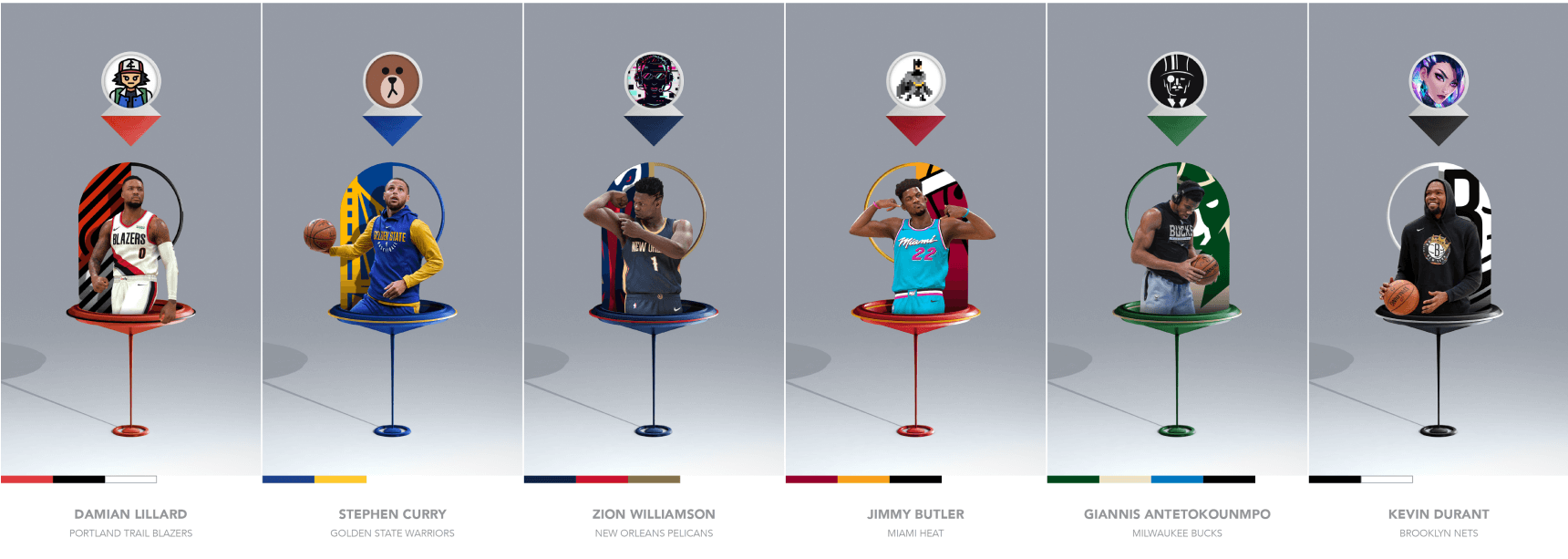
As Niantic planned to meet the NBA players featured in the game, we created a one-page interactive guide with parallax animation. It let Niantic show the highlights of the game to its stars quickly and engagingly.
The interface was the first of three phases.
Niantic then asked Dreamspace to brand NBA All-World and to lead its global marketing, with approvals from the NBA and the NBPA. I was the Executive Creative Director for all three phases. Branding and global marketing, the second and third phases, are their own story.
The game closed in 2023. The system is the work.
NBA All-World went live on January 24, 2023. On June 29, 2023, Niantic announced it would close the game as it scaled back its in-house development, less than a year after launch. There are no player numbers to report here, so this case study is about the design.
Start with the feature people feel.
The player card was one feature, and delivering it completely earned the trust to design the rest.
Design for the decisions, not the screens.
The player is a coach making constant choices. Quiet, simple screens keep complex mechanics usable.
Build a language, not a set of assets.
More than 700 icons that mix, match and convert to 3D can serve features that did not exist when they were drawn.
Work as one team across companies and time zones.
Long working sessions with the publisher and the developer kept designing, revising and approving in one loop.
Client: Niantic, with the NBA and the NBPA. Hyp Games developed the game and designed its mechanics. Dreamspace designed the UX and UI of the player cards and of the map and points of interest, and the UI for the rest of the game working from Hyp Games’ UX documents, along with the game’s icons, loading screen and interactive player’s guide. I led the work as Executive Creative Director and partner at Dreamspace, with a team of more than 15 people. GRAFX Co., my production company, produced the marketing assets, the films and videos, and the 3D development. Images and films are from the project.
NBA All-World, the NBA and its teams, player names, logos and likenesses, and brand names such as Puma and Nike belong to their respective owners. Brand placements shown are part of the design work.
Sources: Niantic, NBA All-World global launch and Pocket Tactics, June 30, 2023.
I lead design for complex products with many moving parts.
Creative direction, UX and UI for games, apps and platforms, from the first feature to the full interface, working alongside the people who build it.
Start a conversation